Haarlem · since 2020
Lazy Sunday Haus
A small studio in Haarlem, two sewing partners in the north of Portugal, one knitting mill in Tilburg, 32 pieces, and a rule that every page tells you the weight of the cloth and who it was cut for.
A small studio in Haarlem, two sewing partners in the north of Portugal, one knitting mill in Tilburg, 32 pieces, and a rule that every page tells you the weight of the cloth and who it was cut for.
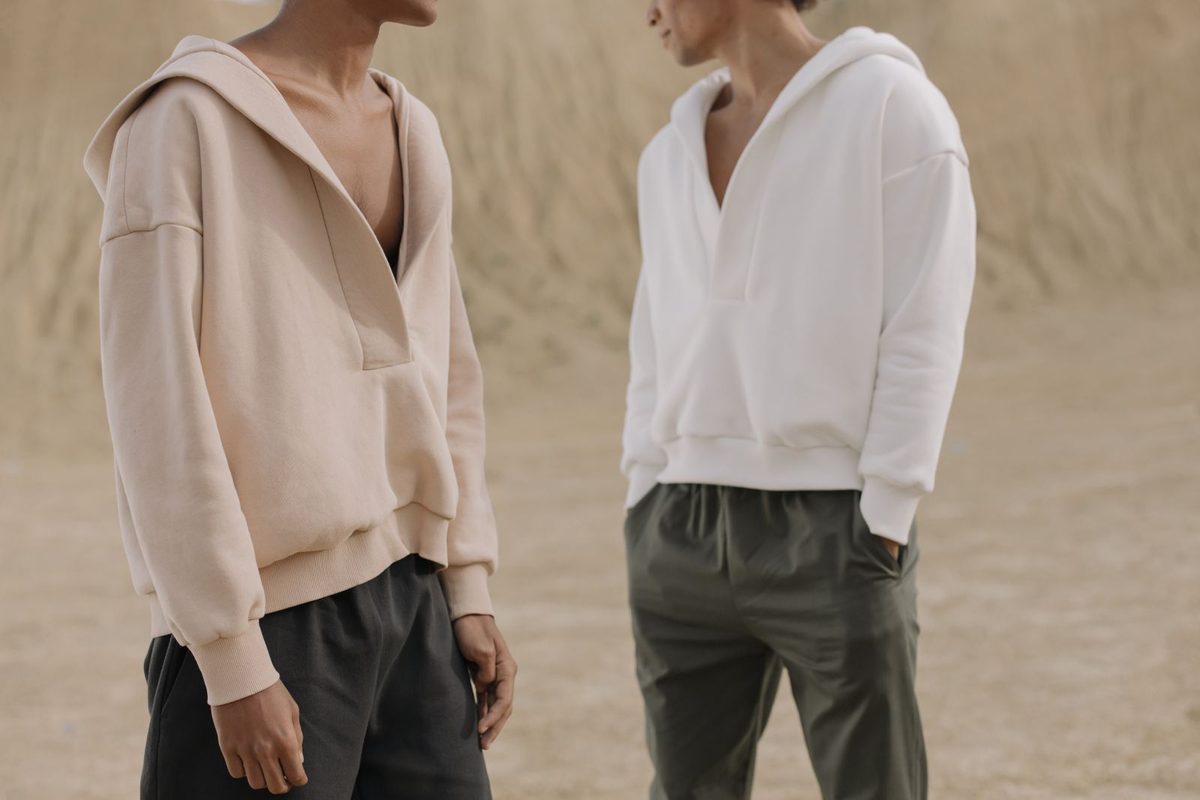
The two of us who started Lazy Sunday Haus share a flat, a washing machine and, for a while in 2019, one grey hoodie. It fitted him like a hoodie and her like a tent, and the label said unisex. That was the whole problem in one garment: the clothes people actually live in at the weekend were either an afterthought from a sportswear brand or a one-size-fits-nobody from a fashion one.
So we drafted three blocks instead of one, found a loopback mill near Porto that would weigh its cloth for us, and put the number on the page. The first six pieces went on sale in 2020. The grey hoodie is still in the flat; it is the one on the men’s block now.
We still do not make anything we would not wear on a Sunday. Nothing here has a collar you would iron for work.

 cotton · wool · nothing else
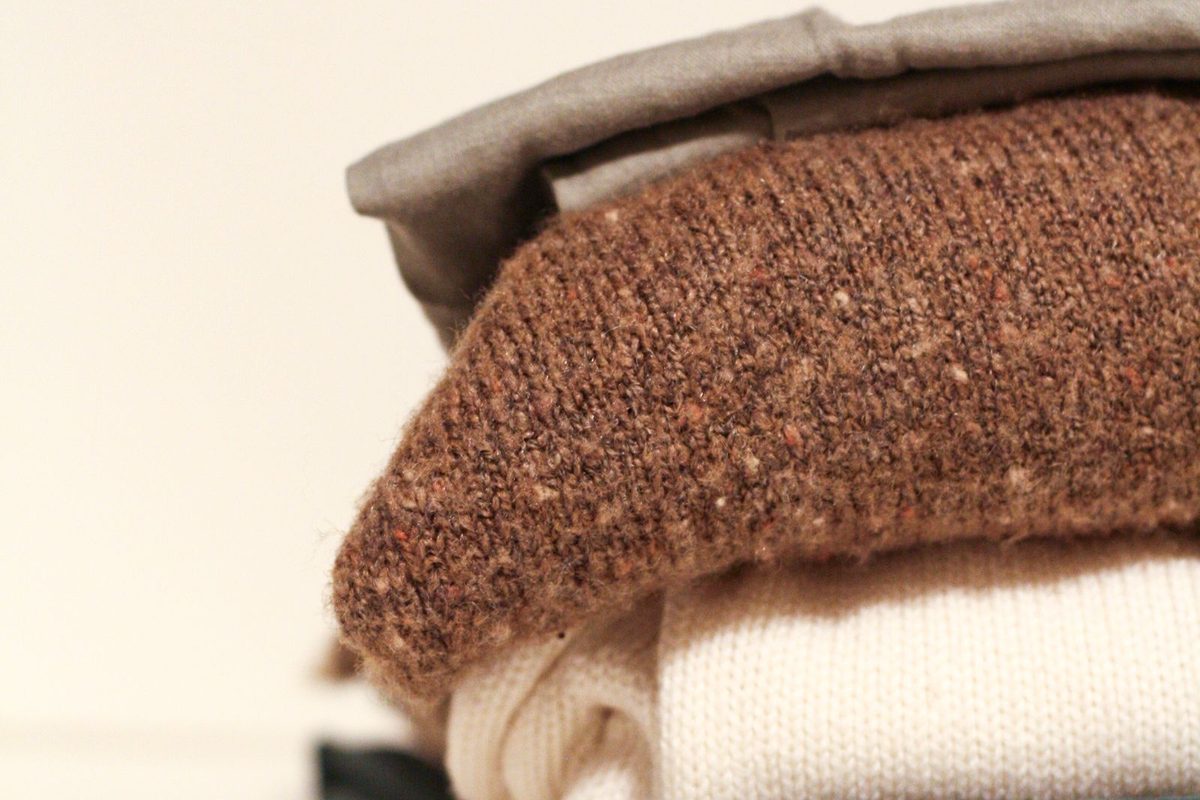
Everything in the range is organic cotton, brushed cotton or a wool blend. Polyester fleece is warm, cheap and quick to dry, and we do not use it: it pills into hard beads that never come off, it holds smell after one wear, and it sheds plastic every time it is washed. Cotton pills softly and stops. Wool does not need washing half as often.
Where a garment needs something synthetic to last, we say so: nylon in the heel of a sock, elastane in a rib so it recovers, nylon in a beanie so it keeps its shape in a pocket. The percentage is on every page, and it is never the main fibre.
Cotton is heavier than fleece and slower to dry. Wool felts if you are careless with the temperature. Brushed cotton sheds for a few washes. Garment-dyed colours soften over time. We would rather sell you a hoodie that behaves like cotton and tell you how, than one that behaves like plastic and never say.
That anything is “anti-pilling”, that a garment will last for ever, or that a fabric is soft without saying how heavy it is. If a sentence cannot be measured, it does not go on a product page.
Two in Portugal, one in the Netherlands, all visited in person several times a year.
A family knitting mill and the sewing workshop two floors up. Every sweatshirt, hoodie, jogger, tee and waffle top is knitted, cut and sewn there, and the mill weighs each batch of cloth before it is cut.
A weaving and shirt-making partner for the flannels and the grandad-collar shirt. Yarn-dyed, so the checks go all the way through the cloth.
A mill in the old wool town forty minutes from Haarlem. The roll-necks, the beanies and every pair of socks are knitted there on 5-, 7- and 12-gauge machines.
Patterns, fittings on real people in all three blocks, a shelf of wash-test garments, and the table where your parcel is folded and packed.
Send a chest measurement and the name of a top that fits you well, and we will tell you which block and which size — including when the answer is the cheaper piece or no piece at all.
Write to us